Taxonomy
Common Name: Golden Barrel Cactus
Botanical Name: Kroenleinia grusonii (Hildm.) Lodé (2014) 1, 2, 3
Synonyms: 2, 3
Echinocactus grusonii (Hildm.) Von Zeisold (1886);
Ferocactus grusonii (Hildm.) Guiggi (2021)
Family: Cactaceae (Cactus)
Taxonomic Fun Facts:
You might know this plant under the more common basionym Echinocactus grusonii, and that is because some authorities still utilize this name. With recent advancements in genetics, plant taxonomists have found that the golden barrel cactus is likely a hybrid between plants from the genus Echinocactus and Ferocactus. Because of this, a group of taxonomists has petitioned for it to be moved to its own genus, Kroenienia.
Morphological Characteristics
Golden barrel cactus is a cylindrical (globose) succulent covered in dense, thick, curved spines that can grow to roughly 3 inches long. They feature prominent ribbing, which allows them, like many other cacti, to thicken or shrink, allowing them to store water in harsh desert climates. They produce striking yellow flowers along their crown, which in the summer are used to attract pollinators.

Golden Barrel Cactus Profile 2
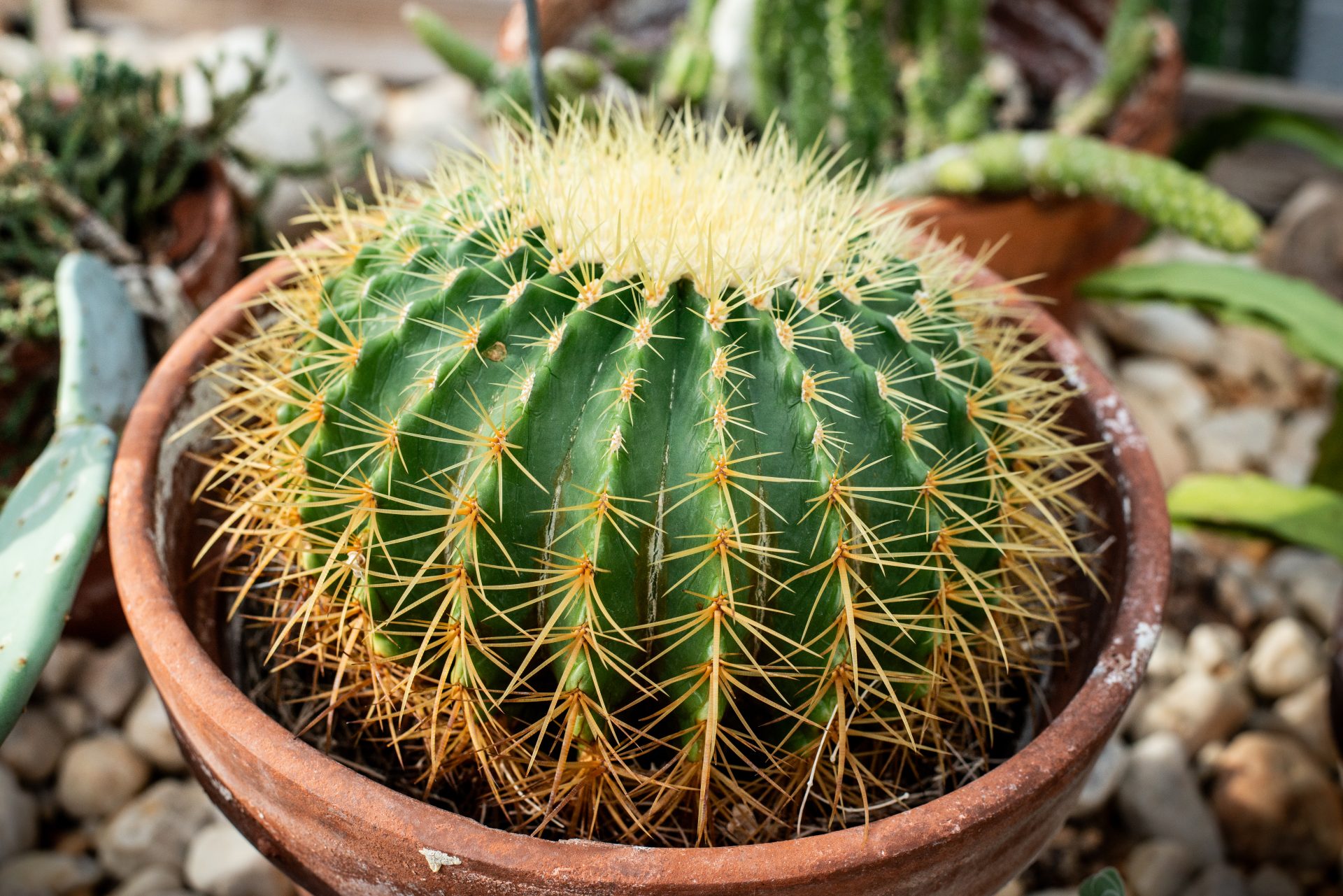
Golden Barrel Cactus From Above
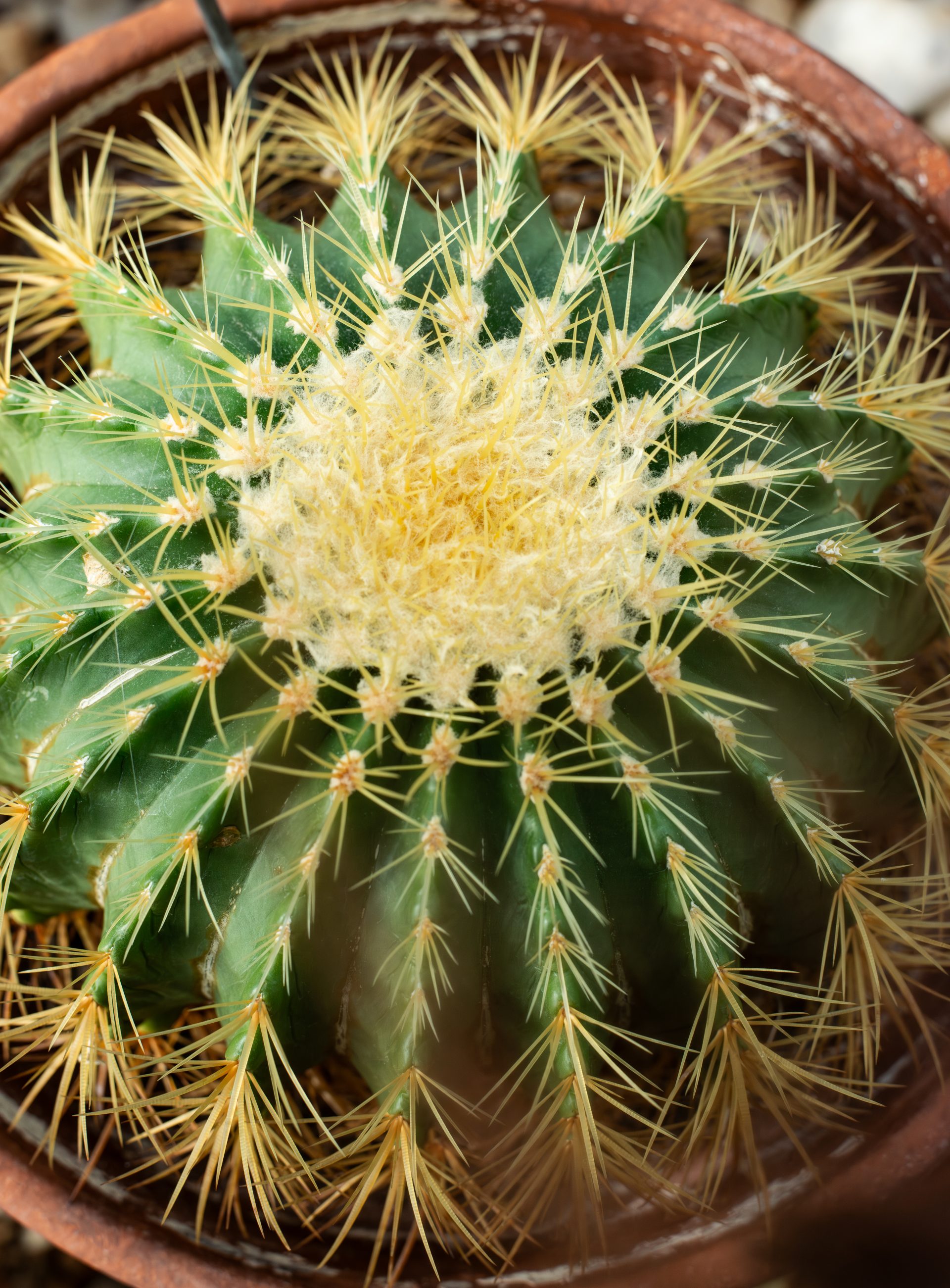
Golden Barrel Cactus Elevated Profile
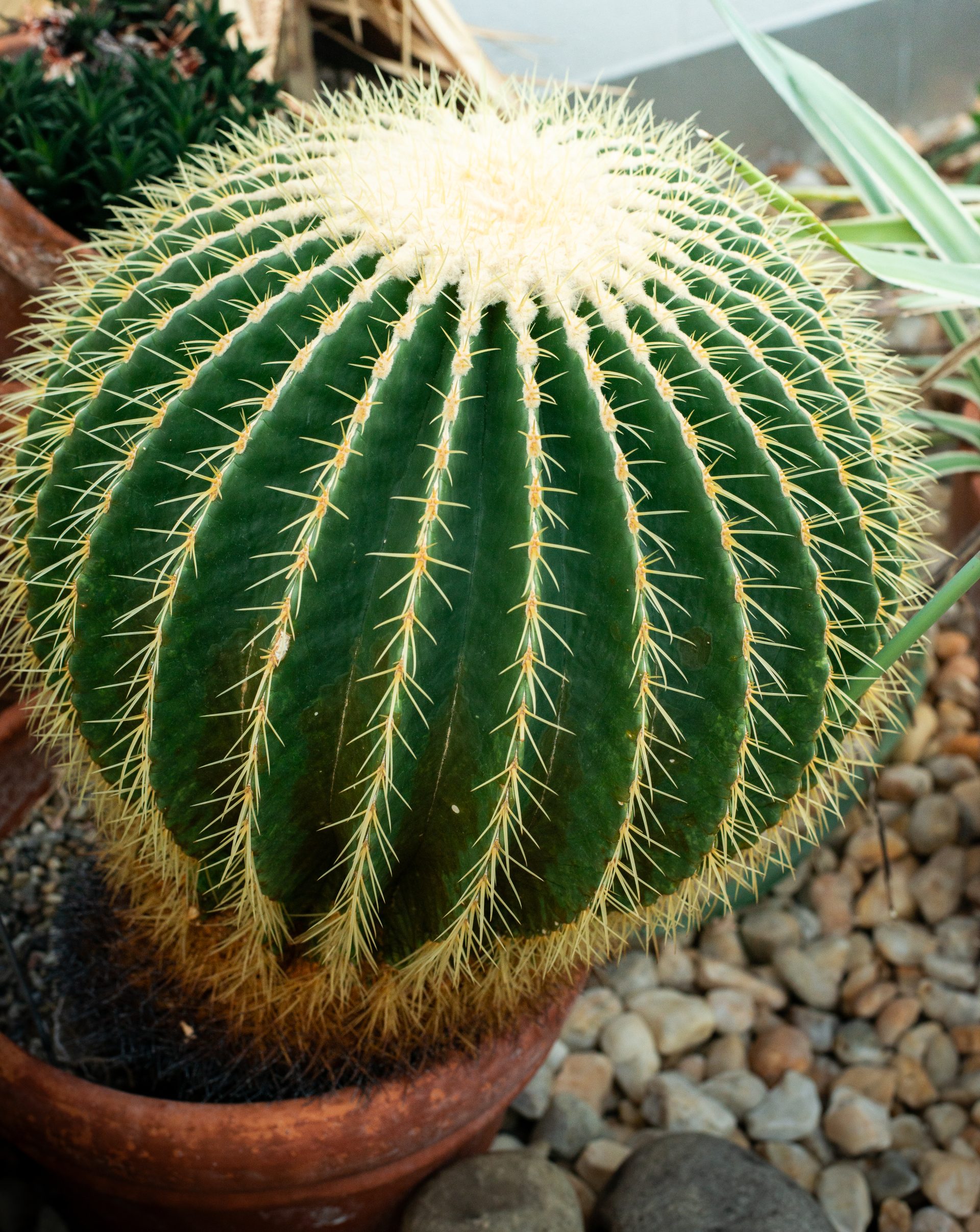
Golden Barrel Cactus Profile
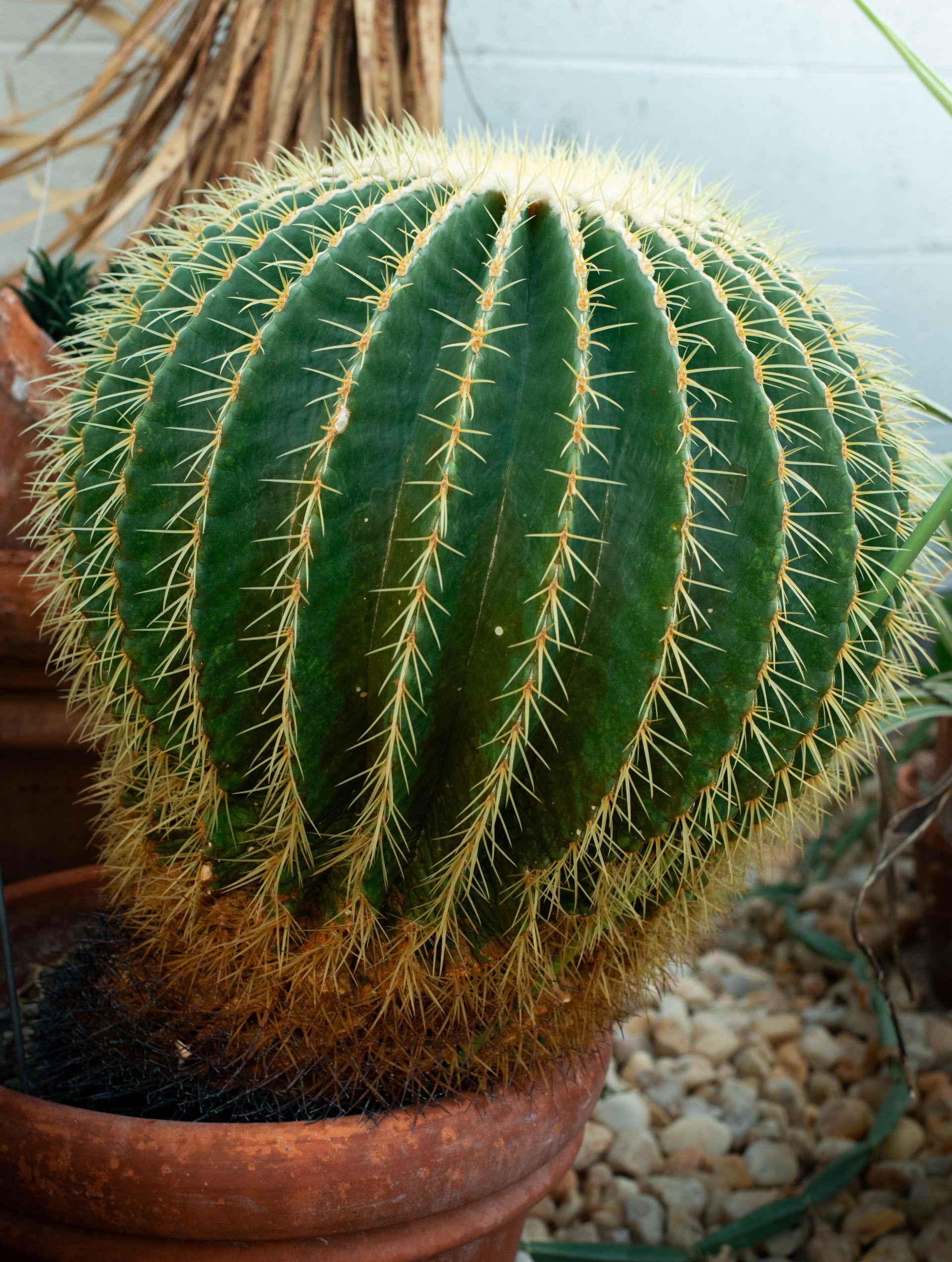
Ecology, Distribution, and Use
Conservation Status: Endangered 4
Conservation Concern:
This cactus is very adaptable and has become a popular landscaping plant in dry, desert-like climates and a favourite amongst plant collectors. Because of the demand for these plants, driving poaching and land development in the 1990s, wild populations began to decline, even becoming locally extinct in some areas. 4
Geographical Range:
The golden barrel cactus is native to the deserts of central and northeast Mexico. Predominantly: Guanajuato, Hidalgo, Querétaro, San Luis Potosí, Zacatecas.
Ecoregion: Central Mexican Matorral ecoregion
Ecological Interactions:
Ethnobotanical Use:
This cactus is typically used for landscaping and can be found in gardens all around the world. It is also a popular house plant. The fruits are not considered edible but are sometimes consumed as a source of water. 4