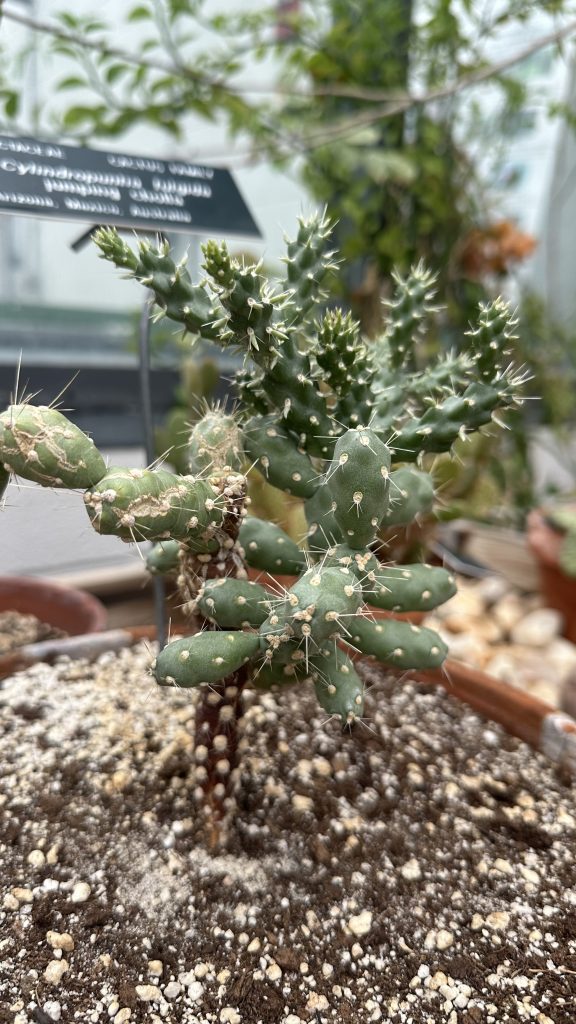
Common Name: Jumping Cholla
Latin Name: Cylindropuntia fulgida
Family Name: Cactaceae (Cactus family)
Geographical Range: Found primarily in the Sonoran Desert in the southwestern United States (Arizona, California) and northwestern Mexico.
Fun Fact: The “jumping” in its name refers to its spiny segments, which easily detach and seem to “jump” onto nearby objects or animals when brushed against. This is a survival mechanism for spreading seeds.
Uses by people: Historically used by Indigenous peoples for food, specifically the cholla buds. The woody skeletons of dead cholla plants are also sometimes used as decorative items or for crafting.
Uses by animals: Provides shelter for birds and small animals, especially during harsh desert conditions. Its fruits are a food source for animals like the desert tortoise and javelina.
Roles in their ecosystem: Plays a key role in preventing soil erosion in desert environments. Its dense, spiny structure offers protection for ground-nesting birds and other wildlife and it also serves as a pollination site for bees and other desert pollinators.