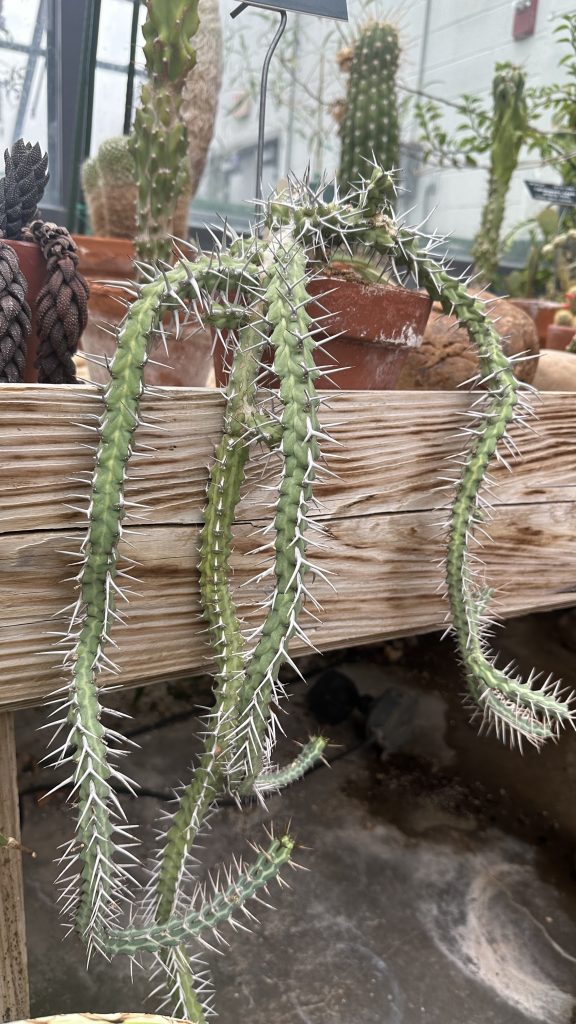
Common Name: Fish Bones
Latin Name: Epiphyllum anguliger
Family Name: Cactaceae
Geographical Range: Native to the tropical rainforests of Mexico, where it grows as an epiphyte in the wild, attaching to trees for support.
Fun Fact: The Fish Bones plant gets its name from its unique zigzagged leaves that resemble fish skeletons. It produces fragrant, nocturnal flowers that bloom in late summer to fall.
Uses by people: Commonly grown as an ornamental plant due to its distinctive foliage and fragrant flowers.
Uses by animals: Plant’s flowers attract nocturnal pollinators, particularly moths and bats, which feed on its nectar and aid in pollination. Its structure also provides shelter for small insects and invertebrates.
Roles in their ecosystem: As an epiphyte, it plays a role in the forest’s layered ecosystem without harming the host trees, adding to the diversity of the canopy. Its structure provides microhabitats for small insects, contributing to the overall biodiversity of its rainforest environment.