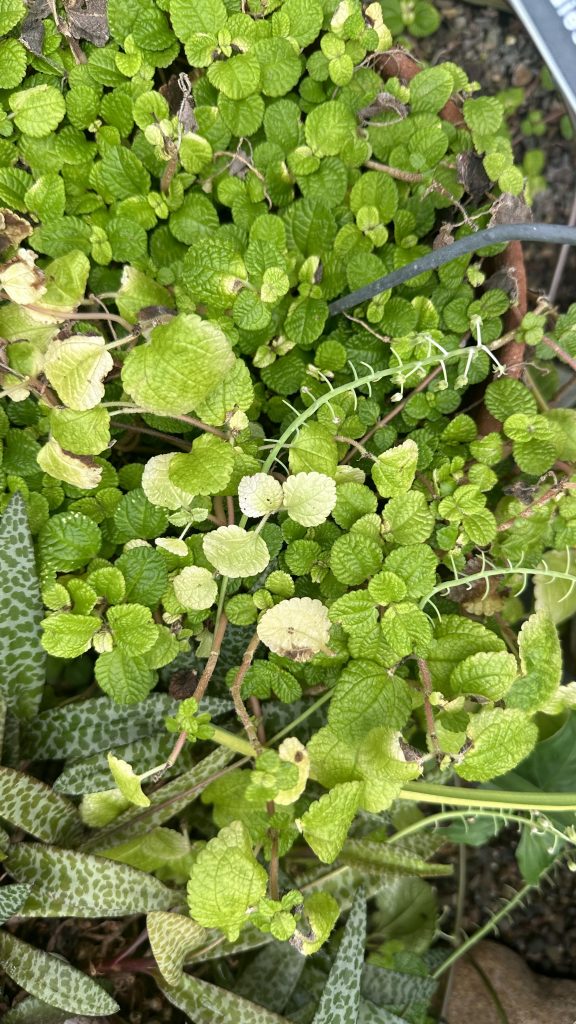
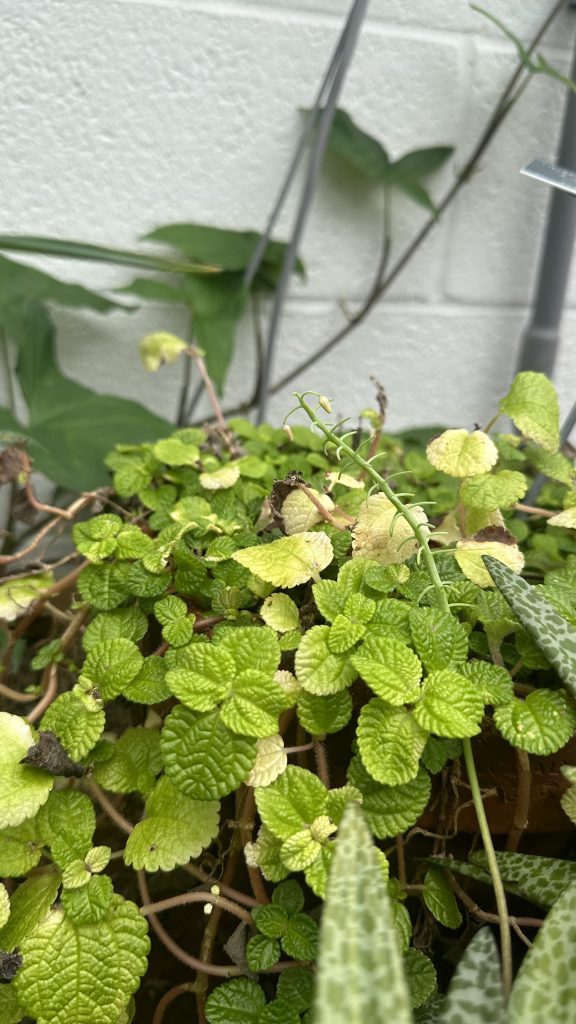
Common Name: Creeping Charlie
Latin Name: Pilea nummulariifolia
Geographical Range: Native to the Caribbean and parts of Central and South America. It is now widely grown as an ornamental plant around the world.
Family Name: Urticaceae (Nettle)
Fun Fact: It has leaves that have a slightly fuzzy texture, which helps it retain moisture. This adaptation is useful in its native tropical habitats, where humidity can fluctuate. The unique leaf texture also makes it more resistant to pests like aphids, as the fuzziness creates a natural barrier.
Uses by people: Primarily grown as an ornamental plant indoors and in gardens, especially for ground cover or hanging baskets.
Uses by animals: It does not provide food for animals due to its mild toxicity, but its ground cover creates a habitat for insects, small invertebrates, and occasionally small amphibians in warm climates.
Roles in their ecosystem: As a ground cover plant, it helps prevent soil erosion and stabilizes areas where it grows. Its dense foliage provides shelter for insects and small invertebrates, contributing to biodiversity in its ecosystem. It also helps retain soil moisture and adds organic material to the soil as it decomposes.