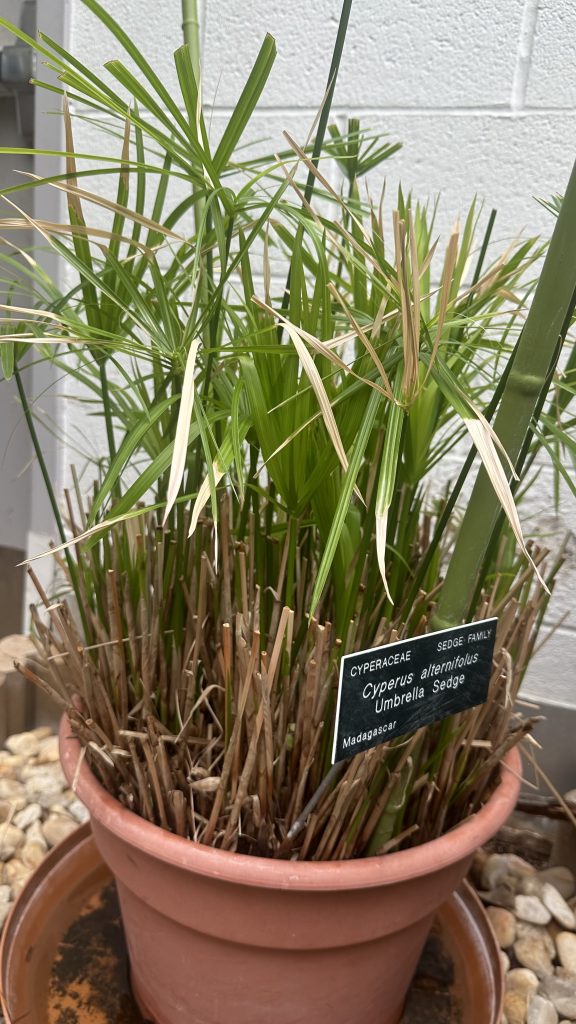
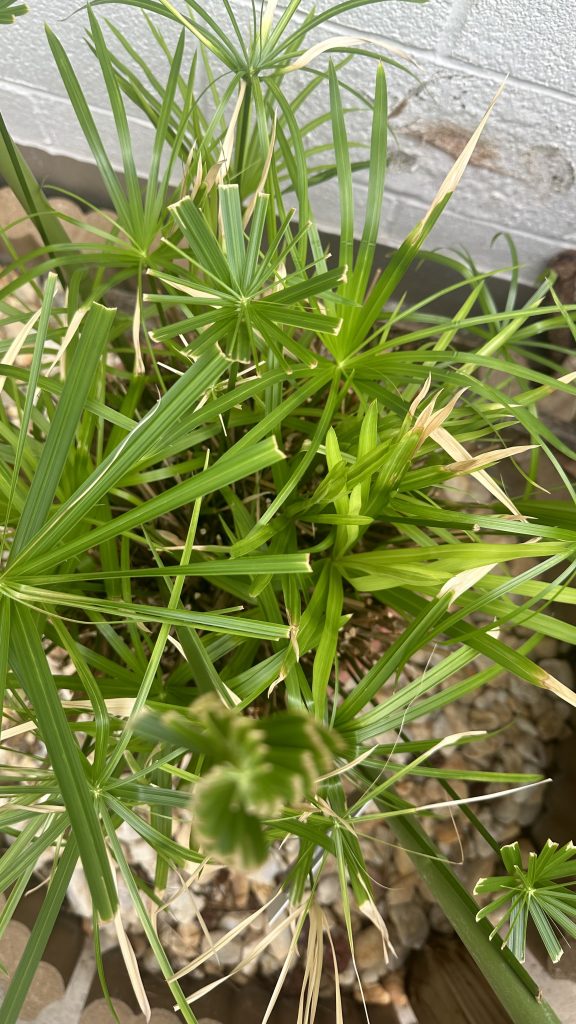
Common Name: Umbrella Sedge
Latin Name: Cyperus alternifolus
Family Name: Cyperaceae (Sedge)
Geographical Range: Native to Madagascar but now widespread in tropical and subtropical regions worldwide, often found near rivers, lakes, marshes, and other wetland areas.
Fun Fact: The plant gets its common name from the unique shape of its leaves, which radiate in a circle at the top of the stem, resembling an umbrella.
Uses by people: Often grown as an ornamental plant, especially popular for indoor use due to its attractive, tropical appearance and ease of care. It’s also used in water gardens, where it helps filter and purify water.
Uses by animals: Provides shelter and shade for small aquatic animals, and its dense foliage offers nesting material and hiding spots for birds and insects. In some regions, it may also provide a food source for herbivores.
Roles in their ecosystem: The Umbrella Sedge plays a crucial role in wetland ecosystems by stabilizing soil with its roots, which helps prevent erosion. Its presence contributes to water purification as it absorbs excess nutrients and filters pollutants. It also provides a habitat for various aquatic and semi-aquatic species, enhancing biodiversity in wetland areas.