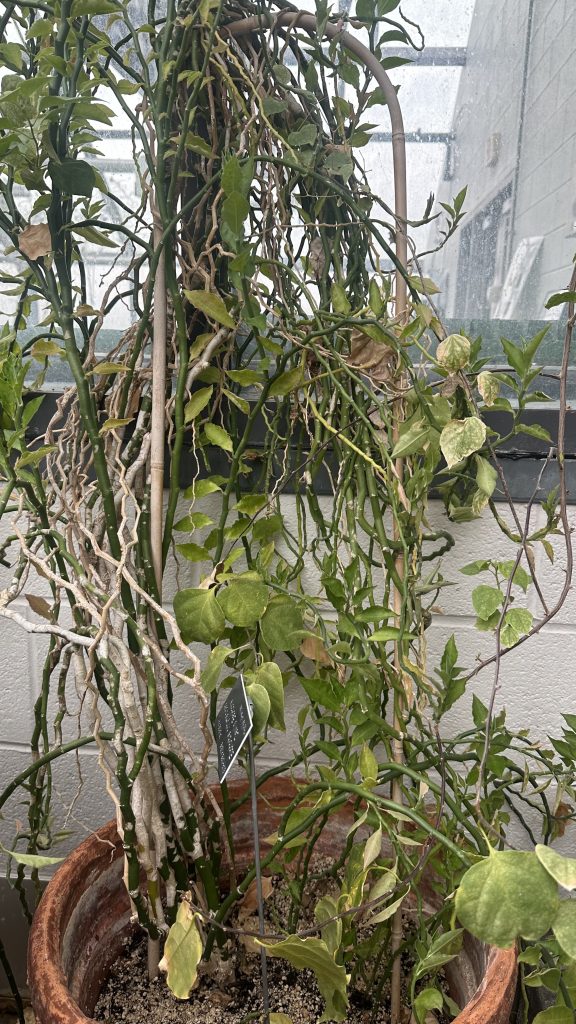
Common Name: Devil’s Backbone
Latin Name: Euphorbia tithymaloides
Family Name: Euphorbiaceae (Spurge family)
Geographical Range: Native to tropical and subtropical regions of the Americas, including Mexico and the Caribbean.
Fun Fact: The plant gets its name from its zigzagging stem growth, which resembles the shape of a spine or “devil’s backbone.”
Uses by people: In traditional medicine, it has been used in some cultures for treating skin conditions and respiratory issues, though its milky sap can be toxic. It is also popular as an ornamental plant due to its unusual shape and colorful bracts (which are modified leafs with a flower or flower cluster in its axil).
Uses by animals: While the plant’s sap is toxic to most animals, some species of insects, such as specialized caterpillars, feed on it without harm.
Roles in their ecosystem: It acts as a source of nectar for pollinators, contributing to the local pollination network. It also helps stabilize soil in its native habitat, preventing erosion, and its toxic properties deter herbivores, potentially protecting nearby less-defended plants.