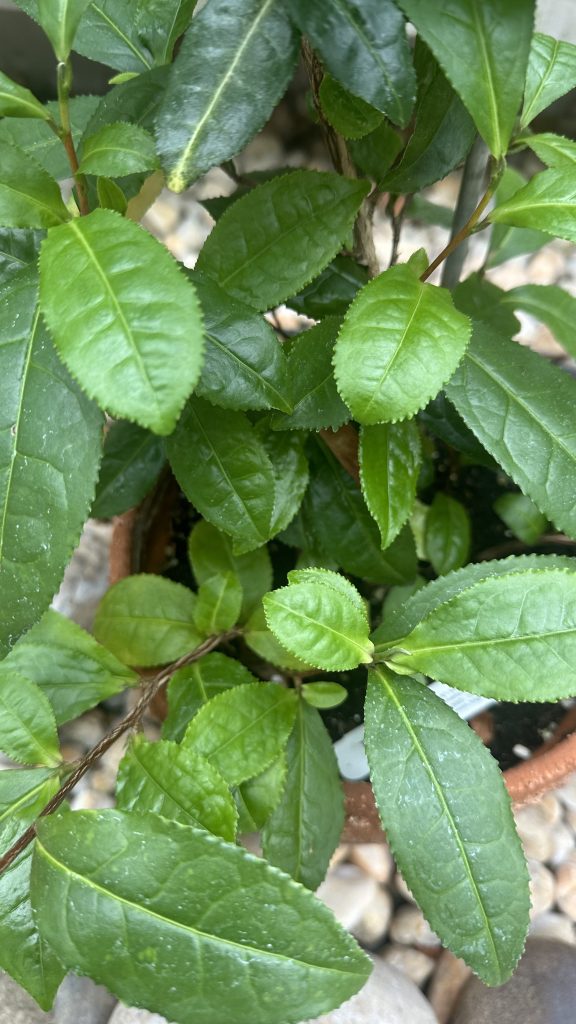
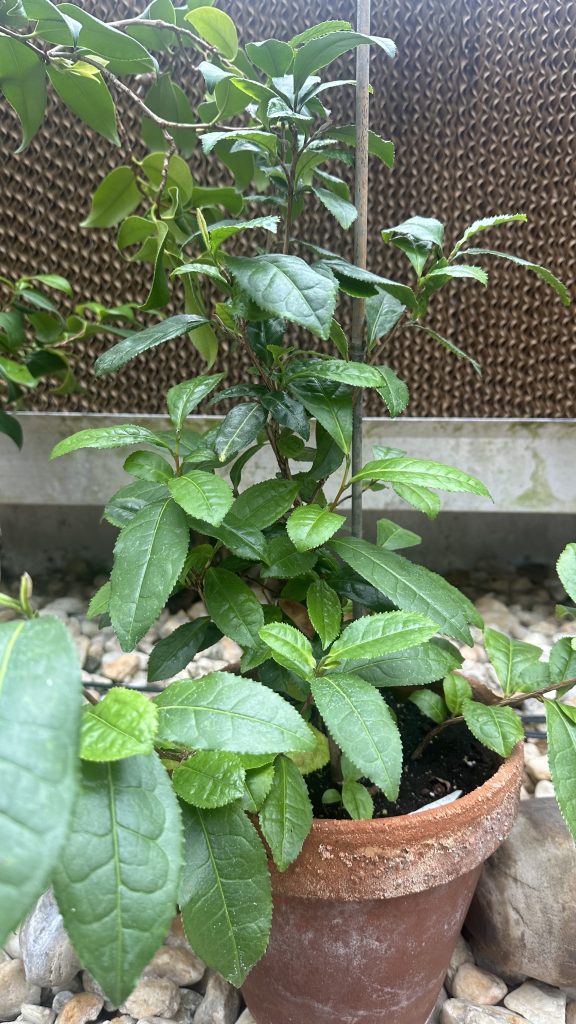
Common Name: Tea plant
Latin Name: Camellia sinensis
Family Name: Theaceae (Tea)
Geographical Range: The tea plant is native to East Asia, particularly regions of China, India, Myanmar, and Cambodia. Today, it is grown commercially in various regions, the largest tea-producing countries are China, India, Kenya, and Sri Lanka.
Fun Fact: All types of true tea (green, black, oolong, white, and pu-erh) come from the same plant, Camellia sinensis. The differences in flavor and color are the result of varying processing techniques, such as oxidation levels and fermentation.
Uses by people: The most well-known use is for making tea, one of the world’s most widely consumed beverages. Tea has also been used in traditional medicine for its antioxidant and soothing properties, and its extracts are sometimes found in skincare products.
Uses by animals: Tea plants do not provide significant food for most animals, but their flowers can attract pollinators like bees.
Roles in their ecosystem: Tea plants can play a role in stabilizing soil and preventing erosion in hilly regions, where they are often cultivated. Additionally, the shade provided by tea plants can create a microhabitat for various insects and small organisms.