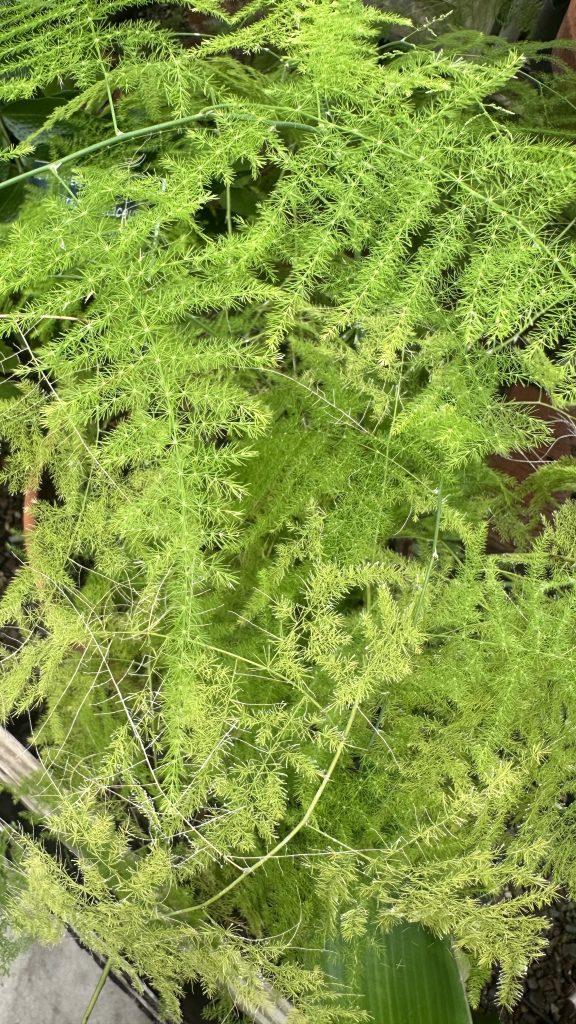
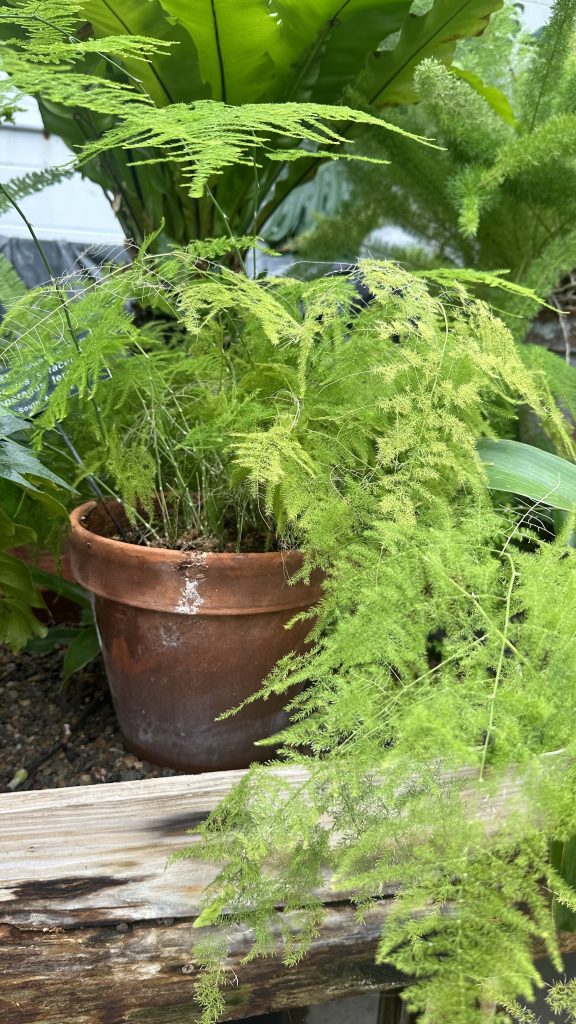
Common Name: Asparagus Fern
Latin Name: Asparagus setaceus
Family Name: Asparagaceae (Asparagus)
Geographical Range: Native to Southern and Eastern Africa but widely grown and naturalized in various regions worldwide.
Fun Fact: Its true “leaves” are actually tiny, scale-like structures along the stems, not the “leaves” that most people think of. Those feathery structures are actually modified stems called cladodes, which are specialized for photosynthesis. This adaptation allows the asparagus fern to efficiently capture light and produce energy even with minimal true leaf surface area, helping it thrive in environments where light might be limited.
Uses by people: Commonly used as an ornamental plant in gardens, flower arrangements, and indoor decor.
Uses by animals: The dense, bushy foliage provides shelter for small insects, and its berries, though toxic to humans, can be consumed by birds, which helps in seed dispersal.
Roles in their ecosystem: Contributes to soil stabilization in areas where they grow densely and offer microhabitats for small creatures. The plant’s foliage can trap moisture and organic material, enriching the soil over time.