Taxonomy
Common Name: Crown-of-Thorns
Botanical Name: Euphorbia milii Des Moul.
Synonyms: 1, 2
Euphorbia bojeri Hook.(1836),
Tumalis bojeri (Hook.) Raf. (1838)
Family: Euphorbiaceae Juss.
Taxonomic Fun Facts:
This plant is named after the once governor of Bourbon Island (now known as the island of Réunion), Baron Milius, who is thought to have introduced the plant to France in 1821.4
Morphological Characteristics
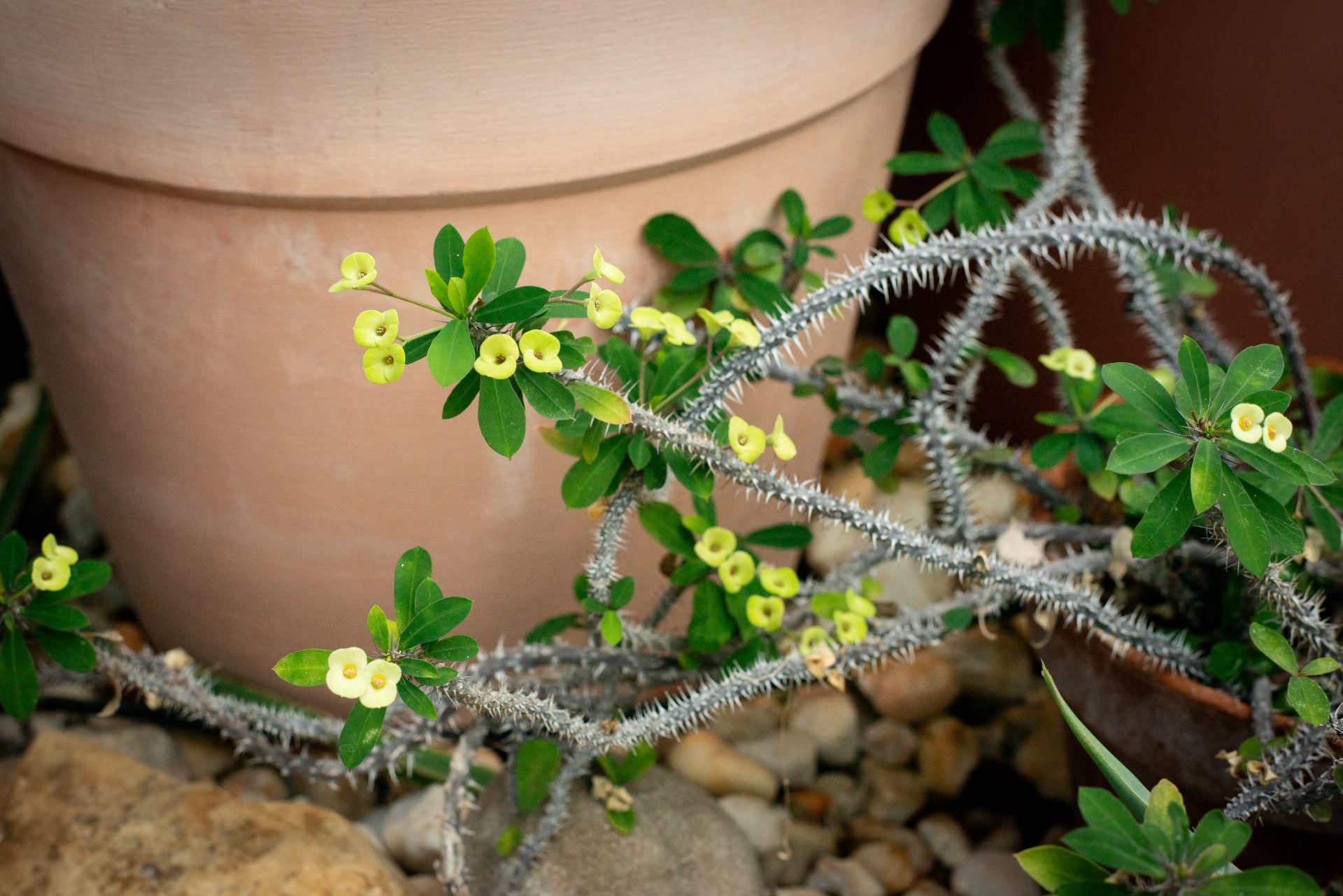
Crown-of-thorns tends to be an evergreen shrubby or sprawling succulent with thick, waxy leaves. It is characterized by its grey, twiggy stems with long thorns and small, insignificant flowers (known as “cyathia”). The flowers are nestled in brightly colored modified leaves called bracts, which are often mistaken for flower petals and fulfill a similar purpose by attracting pollinators. The bracts are typically red, pink, or white, though there are also yellow and orange cultivars. The petalless flowers surrounded by bracts are characteristic of the family Euphorbiaceae.

Crown of Thorns Inflorescence
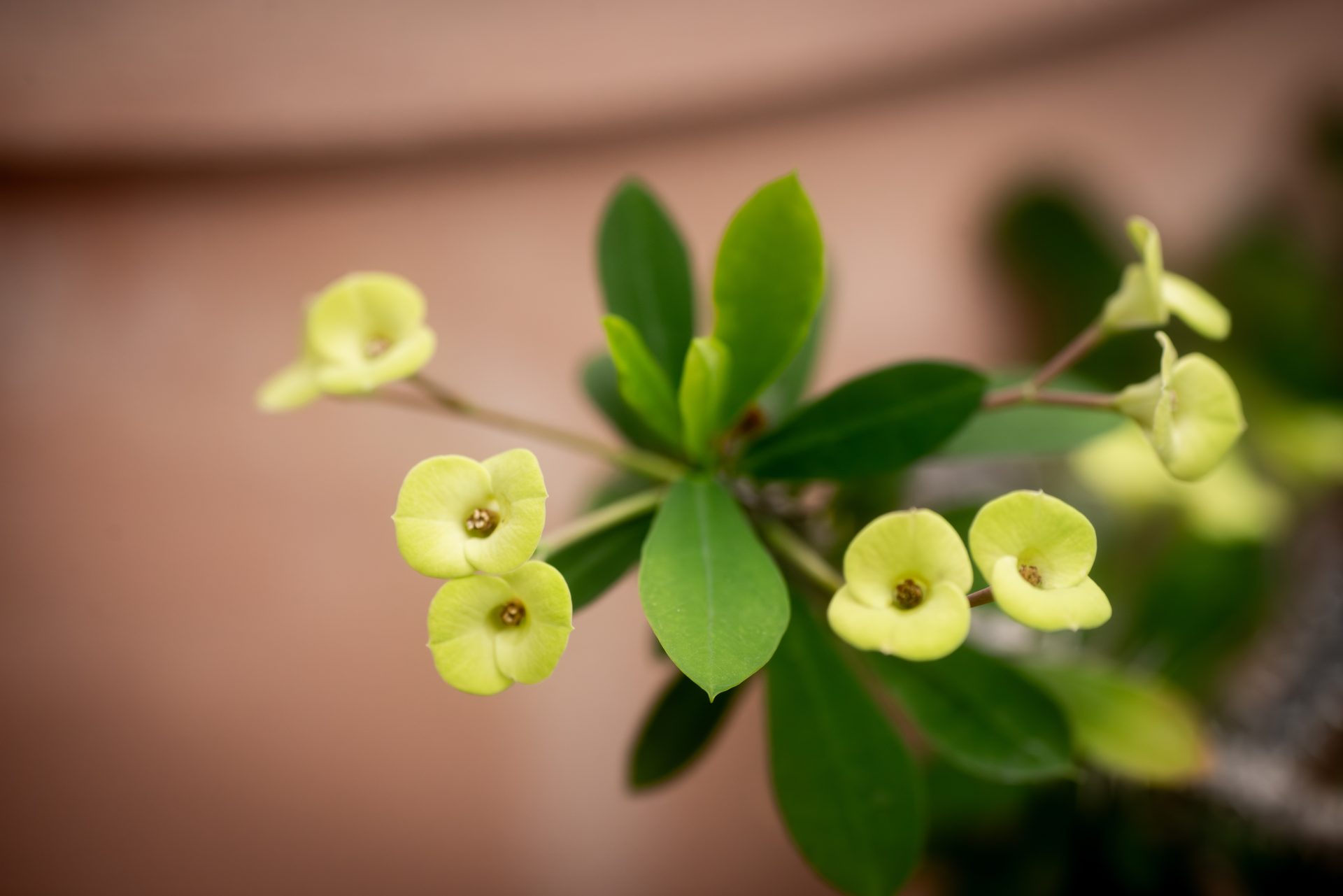
Crown of Thorns Flowers
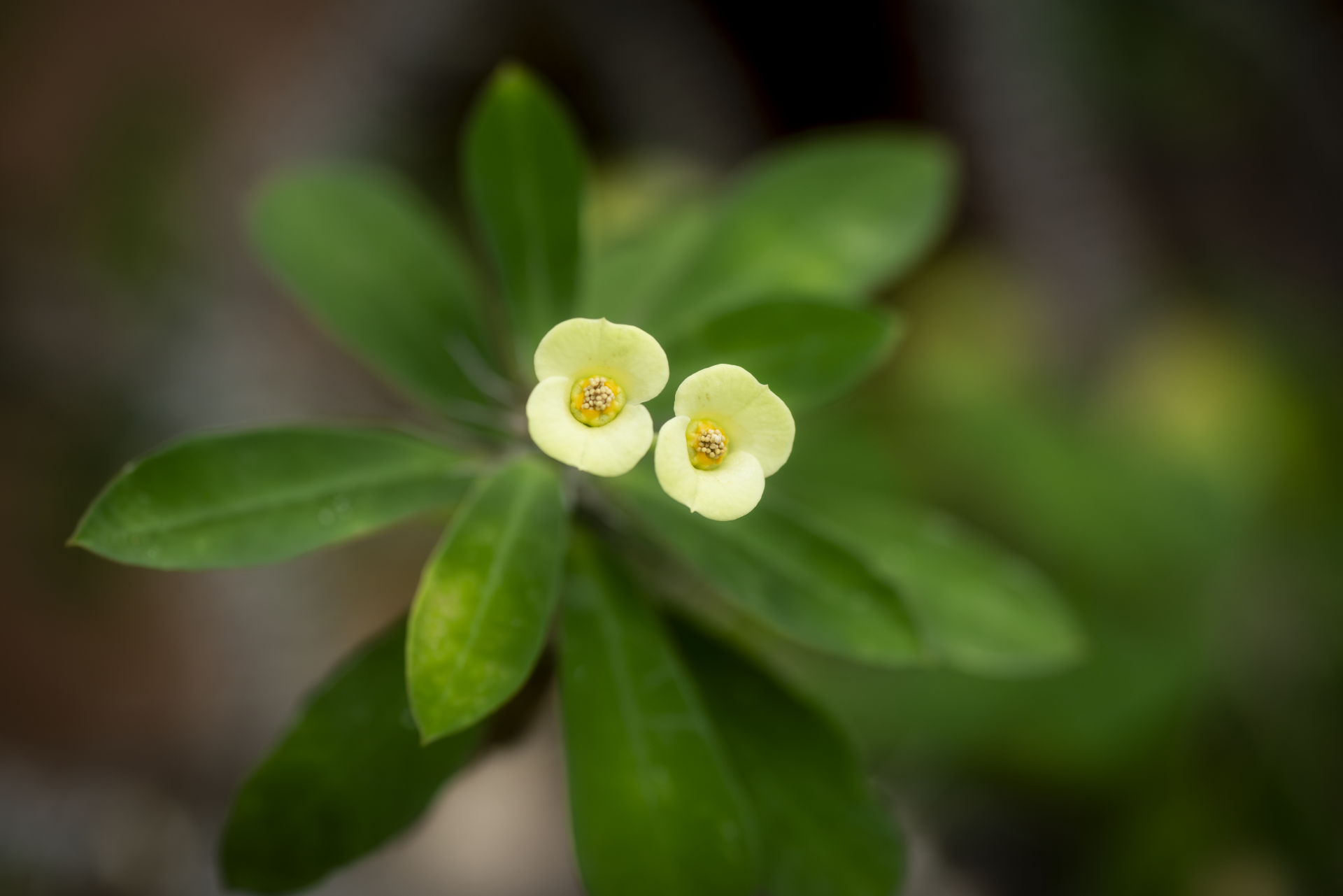
Crown of Thorns Diagram
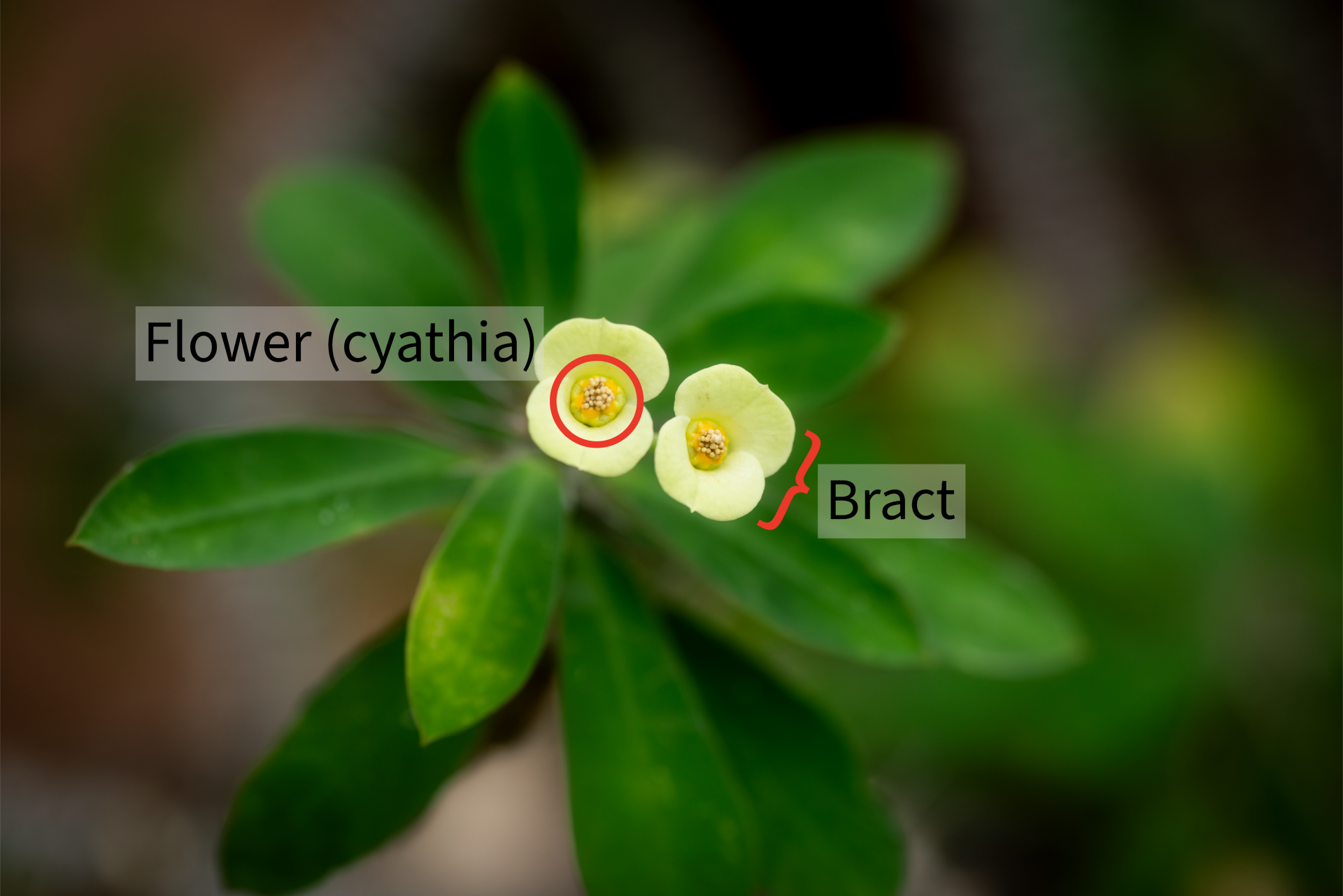
Crown of Thorns Plant Without Flowers
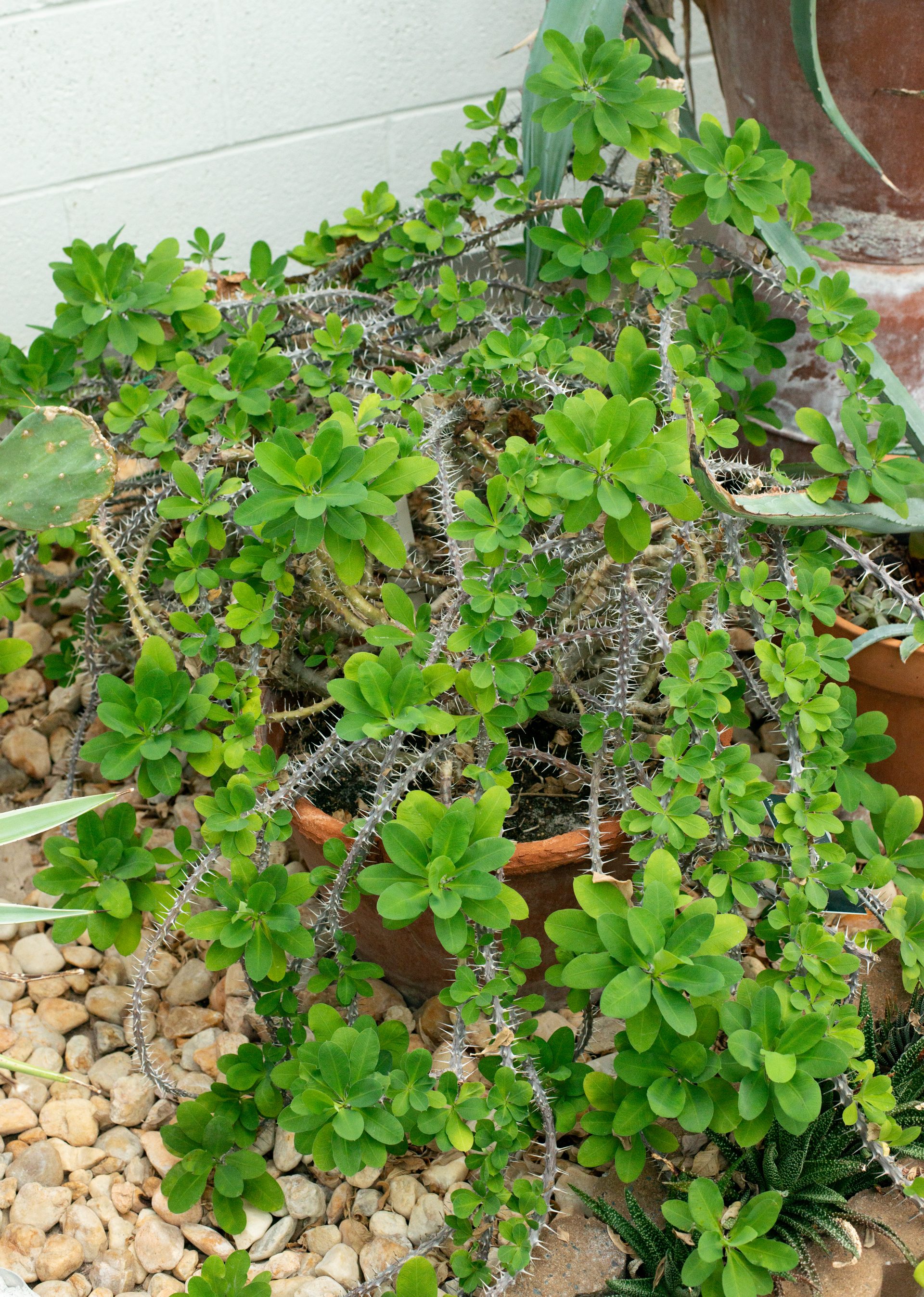
Crown of Thorns Plant with Flowers
Ecology, Distribution, and Use
Conservation Status: Least Concern3
Conservation Concern:
This plant is currently thought to be declining in its native environment due to habitat fragmentation and degradation.3
Geographical Range:
Crown-of-thorns is endemic (native) to the island of Madagascar. It can also be found on the African mainland, including Kenya, Tanzania, and Uganda, though these populations may be introduced. Introduced populations can also be found in Asia and South America.1, 4, 5, 6
Ecoregion: Madagascar spiny forests
Ecological Interactions:
In its native ecosystem, the fruits and flowers provide food for animals and pollinators, while thorny thickets provide habitat for birds and small animals. In areas where it is introduced, it can outcompete native species, leading to altered ecosystem function and loss of endemic biodiversity. 5, 6
Ethnobotanical Use:
Crown-of-thorns is a widely grown ornamental species and can be found all around the globe due to its drought tolerance. It is also a beloved house plant. It also has traditional pharmacological use and has been used to treat inflammation, microbial infection, and promote wound healing. There is a body of research that is also looking at the plant’s latex and leaf extracts as possible agents for therapeutic applications against cancer. It should be noted that the latex of this plant is considered toxic if ingested and can act as a skin irritant in mammals.5
Sources
- Kew
- IPNI
- IUCN Red List
- The Identity of Euphorbia milii var. breonii, nom. nud. (Euphorbiaceae), Leonard E. Newton, 1994
- Phytochemistry and Pharmacological Potential of Euphorbia Milii: Integrating Traditional Therapeutic Applications for Anti-Tumor Activities, Agarwhal & Prakash, 2024
- Non-native shrubby species of Euphorbia (Euphorbiaceae) in Tunisia, Mokni, 2023